

In today's business environment, sustainability is no longer a corporate buzzword. It has become a strategic necessity. Rising environmental concerns, stricter regulations, and growing consumer expectations are pushing organizations to rethink how they operate. At the center of this transformation is technology, which is helping businesses reduce their environmental impact while improving efficiency, profitability, and long-term resilience.

Sustainability is no longer a long-term aspiration. It is becoming a measurable business priority. By 2026, information technology is evolving into the “central nervous system” of sustainable energy, helping organizations integrate AI, automation, digital twins, and advanced analytics to drive operational efficiency and environmental impact at scale.
For businesses across industries, technology is transforming sustainability from fragmented initiatives into intelligent, connected ecosystems that support both growth and climate goals.

In today’s fast-moving, digitally powered economy, business efficiency goes far beyond cutting expenses. It now depends on speed, scalability, adaptability, seamless customer experiences, and the ability to make real-time, data-backed decisions. As competition intensifies, organizations are rethinking how they operate, collaborate, and create value. In this environment, digital transformation services have shifted from being optional IT upgrades to becoming core strategic initiatives.

In a digital-first world where speed, quality, and scalability determine success, software development can no longer afford disconnected workflows. Businesses today need solutions that are thoughtfully designed, seamlessly built, and continuously improved. This is where end-to-end (E2E) software development comes in. A holistic approach that manages the entire software lifecycle under one unified strategy.
Many digital transformation initiatives begin with big aspirations, such as modern systems, smarter processes and better customer experiences. Yet, just as often, they lose momentum. Teams chase disconnected projects, budgets are stretched thin, and results fall short of expectations. The root cause is rarely the technology itself. More often, it’s the absence of a clear, well-structured digital transformation roadmap.
Digital transformation is no longer a buzzword. It has become a fundamental driver of growth, resilience, and competitive advantage for businesses worldwide. Across industries, organizations are adopting technologies such as Artificial Intelligence (AI), cloud computing, automation, the Internet of Things (IoT), and data analytics to modernize operations, deliver better customer experiences, and unlock new business models.

Technological advancements have always played a crucial role in shaping modern society. In recent years, the rise of the Internet of Things (IoT), coupled with the power of 5G technology, has begun to redefine the future of urban living. These innovations promise to transform cities into interconnected hubs where devices communicate seamlessly, enhancing everything from traffic management to healthcare services.
IoT and 5G: The Backbone of Smart Cities
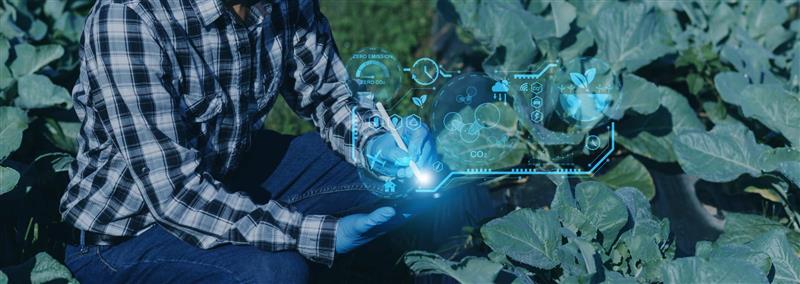
Agriculture is undergoing a major transformation as 5G networks, IoT devices, and AI converge to create fully connected, highly efficient farms. Instead of relying on manual observation and generalized farming practices, modern operations now use real-time data, automated equipment, and advanced analytics to boost yields, reduce waste, and cut labor demands.
How 5G and IoT Enable Connected Agriculture

In 2025, manufacturers will continue their efforts to embrace digital transformation, though some may encounter difficulties in achieving meaningful returns from these initiatives.
User Experience (UX) design is the key to the success of any digital product. These elements are not just about visual appeal; they influence the way users engage with your website or app. A well-executed UX design ensures that users are engaged, their journey is effortless, and their experience is satisfying. If done properly, UX design can transform casual visitors into loyal users.
U.S.A
Missouri, Headquarters
14567 N Outer Forty Road, Ste 475
Chesterfield, Saint Louis, MO 63017
Middle East
Dubai, UAE
Burlington Tower, 18th Floor, Ascendris Business Center Suite 16, Business Bay, Dubai, UAE 121907
India
Hyderabad
The Square, B- Block, 1st Floor 109,110,111/112, Serilingampally, Nanakramguda, Hyderabad, Telangana 500 032.
Bhubaneswar
7th Floor, NSIC-IMDC Building, Dharmapada Bhawan, IDCO Plot No-6, Block-D, Mancheswar Industrial Estate, Bhubaneswar-751 010
